Insights
What a qualification stage means in procurement law: an overview of the process, statutory deadlines under VgV and VOB/A, and practical tips for Bid Managers.


Felicitas von Rauch
Marketing & Sales
Key Takeaways
A qualification stage is the preliminary suitability check in restricted procurement procedures and negotiated procedures.
The statutory minimum deadline for requests to participate under the VgV is generally 30 days.
Procurement offices exclusively review technical expertise, capacity, and reliability during this phase, not the bid itself.
Missing or incorrect proof frequently leads to immediate exclusion from the further procurement procedure.
Introduction
Public contracting authorities in Germany award around 500 billion euros to contractors annually (Public Tenders Are Germany's Next Growth Engine). For you as a Bid Manager, this means enormous revenue potential if you master the formal hurdles of the suitability check. A qualification stage is exactly this hurdle in restricted procurement procedures and negotiated procedures. Whoever makes mistakes here is eliminated before the actual bid is written. This guide shows you how to meet deadlines, precisely prove suitability criteria, and maximize your success rate during the application.
Contents
What does the qualification stage mean in procurement?
The Process: Tender, Qualification Stage, and Bid Phase
How do you correctly analyze suitability criteria in the qualification stage?
Construction Works: What deadlines apply to the VOB qualification stage?
Checklist: Preparing the Request to Participate Without Errors
How Forgent Approaches This
Frequently Asked Questions About the Qualification Stage
What does the qualification stage mean in procurement?
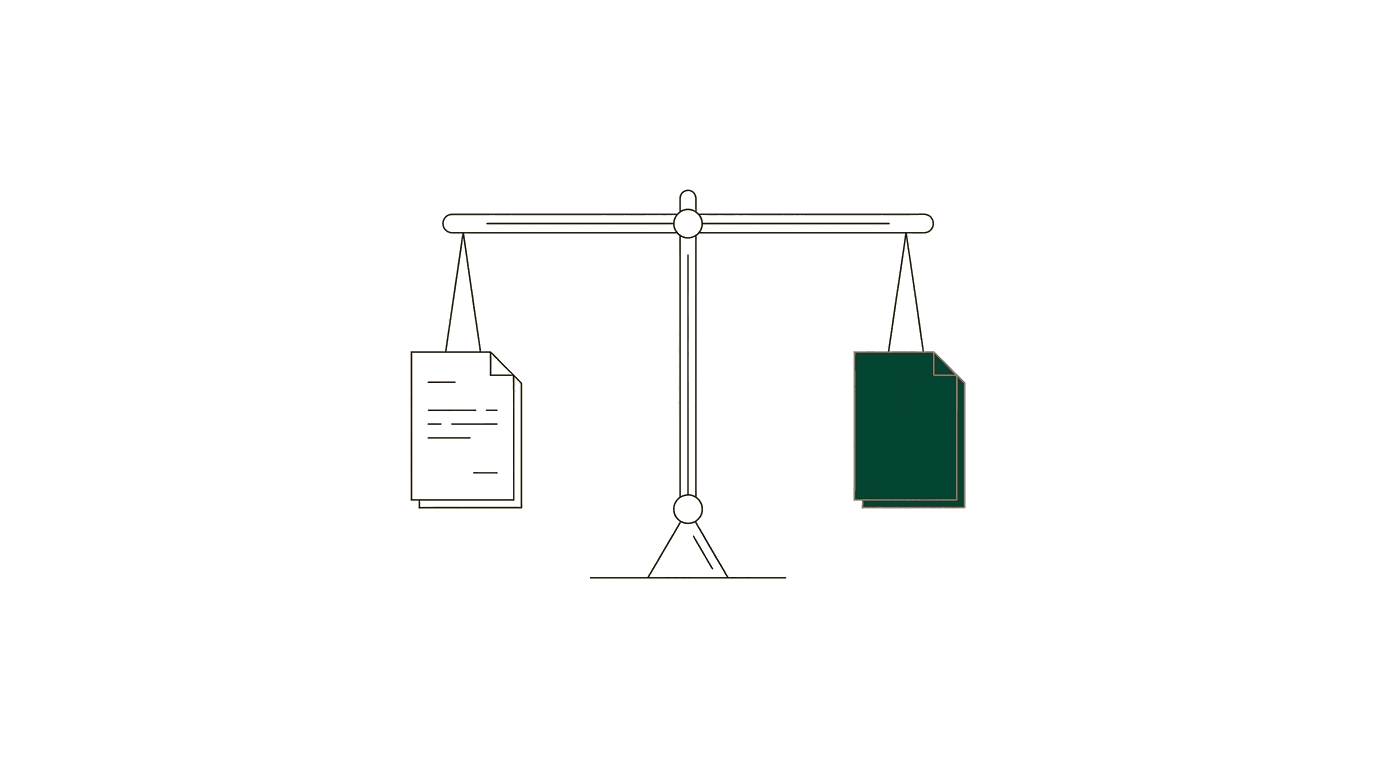
A qualification stage is the preliminary suitability check in a two-stage procurement procedure. As a bidder, you initially only submit a request to participate to prove your technical expertise, capacity, and reliability before the procurement office invites selected companies to submit the actual bid. According to § 97 GWB, the strict principles of transparency and equal treatment also apply during this phase.
Feature | Open procedure | Procedure with qualification stage |
|---|---|---|
Process | Single-phase | Two-phase |
Submission | Direct bid | First request to participate, then bid |
Review focus | Suitability and bid price/concept | Initially pure suitability check |
Bidder pool | Unrestricted | Restricted to suitable applicants |
Formal correctness determines your admission.
The Process: Tender, Qualification Stage, and Bid Phase
To successfully navigate the process, you must systematically process the requirements of the procurement office. The procedure is divided into four concrete steps for you as a bidder.
Step 1: Check the notice and deadlines
The procurement office publishes the contract notice. You must immediately identify the deadline for the request to participate. Under the Procurement Ordinance (VgV), the statutory minimum deadline for the receipt of requests to participate is generally 30 days from the dispatch of the notice.
Tip: Enter the deadline for bidder questions separately in your calendar. This usually ends well before the submission deadline for the request to participate.
Step 2: Analyze suitability criteria
Extract all required suitability criteria from the procurement documents. Contracting authorities review economic, financial, as well as technical and professional capacity.
This is where the difference in technology shows in practice. Generic AI like ChatGPT often fails due to the complex structure of procurement documents and overlooks hidden knockout criteria. A domain-specific AI, on the other hand, precisely extracts all suitability requirements from the documents and matches them against your company profile. The Bid Manager then decides whether an application is worthwhile based on this processed data.
Step 3: Compile proof and forms
Collect the required references, commercial register extracts, and self-declarations. Use the ESPD (European Single Procurement Document) if the procurement office accepts this as preliminary proof. Manual review and compilation often take days. The HR service provider YER was able to accelerate its bid/no-bid decisions by 87.5% by using specialized software (How YER Accelerates Bid Decisions by 90% – with Forgent).
Step 4: Submit the request to participate
Transmit the complete request on time via the required procurement portal. Pay attention to the correct electronic signature, as formal errors cannot be cured.
A missing document leads to immediate exclusion.
How do you correctly analyze suitability criteria in the qualification stage?
The suitability check is strictly formalized. You must deliver exactly what is required. If three references from the last three years are demanded, a reference from the fourth year is not sufficient.
According to the CTO interview on AI reliability, base models often only achieve an accuracy of 50 to 80% when extracting such specific requirements from procurement documents. You must therefore imperatively double-check the criteria with specialized tools or manually to avoid risking exclusion.
Precision beats any creative interpretation here.

Construction Works: What deadlines apply to the VOB qualification stage?
The provisions of the VOB/A apply to construction works. In a restricted procurement procedure under VOB/A, the contracting authority publicly invites an unrestricted number of companies to submit requests to participate.
The deadlines differ in part from the VgV. You must carefully check the specific requirements of the VOB/A to avoid risking missed deadlines. For you as a bidder, this means that you must adapt your internal processes to the respective procurement regulation.
A missed deadline ends your participation immediately.
Checklist: Preparing the Request to Participate Without Errors
Notice checked for deadlines regarding the request to participate and bidder questions.
All suitability criteria (economic, financial, technical) recorded in a table.
References checked for exact fit with the minimum requirements.
Self-declarations and forms completely filled out.
Electronic signature requirements of the respective procurement portal met.
Before you open the next procurement procedure, check your standard documents for currency.
How Forgent Approaches This
The manual review of suitability criteria and the compilation of proof often cost teams countless hours and tie up valuable resources in Excel lists. As a domain-specific AI platform for tenders, Forgent covers the entire process: end-to-end from finding via evaluating and applying to managing. The system analyzes procurement documents with over 10,000 pages and enables a well-founded bid/no-bid decision in under five minutes instead of several hours. You still make the decision. In a short demo, you will see how Forgent handles this for your next tender.
Frequently Asked Questions About the Qualification Stage
What is the difference between an open procedure and a qualification stage?
In the open procedure, you immediately submit your complete bid including price and concept. In a procedure with a preliminary qualification stage, you initially only apply with your proof of suitability. Only when the contracting authority classifies you as suitable are you invited to submit the actual bid.
What deadlines apply to the request to participate?
The deadlines depend on the respective procurement regulation. In above-threshold procurement under the VgV, the minimum deadline for the receipt of requests to participate is generally 30 days from the dispatch of the contract notice. In cases of special urgency, this deadline can be shortened by the contracting authority.
Can I submit missing proof later in the qualification stage?
The subsequent submission of documents is strictly regulated by law. Procurement offices can request missing declarations or proof under certain conditions. However, as a bidder, you must not rely on this, as an incomplete request very often leads to direct exclusion in practice.
More Insights